 oGPT
oGPT
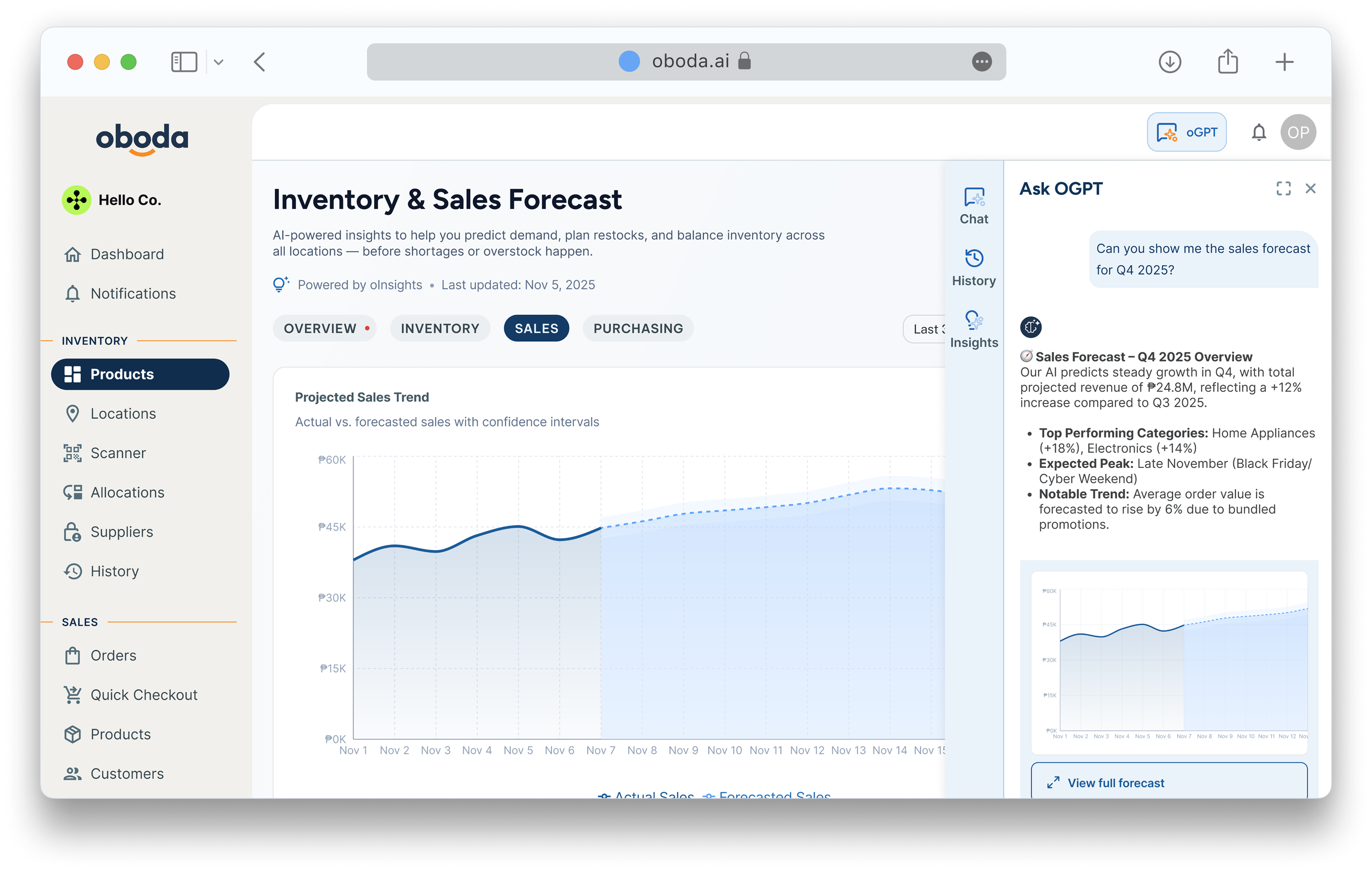
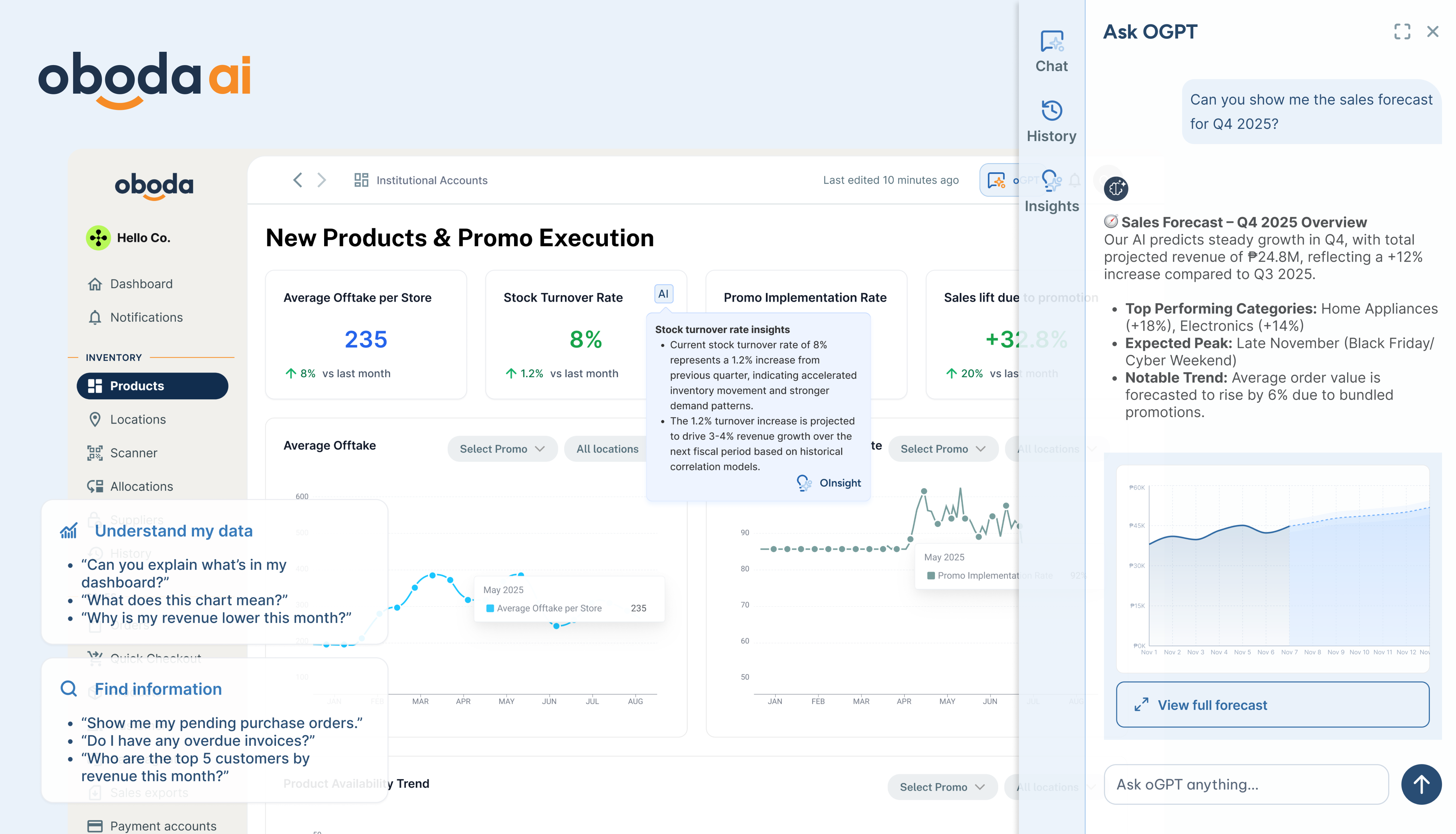
A conversational interface for ad-hoc questions, like “what are my sales forecasts” or “who are my top customers,” so users can get answers without hunting through reports.
I’m shaping AI-assisted ERP workflows that help traditional businesses move from fragmented, manual operations to clearer, digital decision-making.
Disclaimer: This case study is a high-level overview — some specifics are covered by NDA. Happy to walk through the details in a call.
Oboda serves businesses managing inventory, sales, purchasing, and fulfillment, often under real operational pressure: tight margins, manual workarounds, and teams with mixed comfort levels using software.
Bring AI into existing workflows without adding friction. Insights need to show up at the right moment, be easy to trust, and never take the decision out of the user’s hands.
I partnered with product and engineering to map the jobs behind core ERP screens: understanding what changed, deciding what to do next, and acting with confidence. Rather than treating AI as a separate destination, the direction was to embed it where decisions already happen.
Identify the operational questions and handoffs around a workflow.
Study how leading ERPs approach AI to understand table stakes, differentiation, and gaps.
Separate information users need now from supporting detail.
Test the clarity of recommendations, states, and next actions.
oGPTA conversational interface for ad-hoc questions, like “what are my sales forecasts” or “who are my top customers,” so users can get answers without hunting through reports.
 oInsight
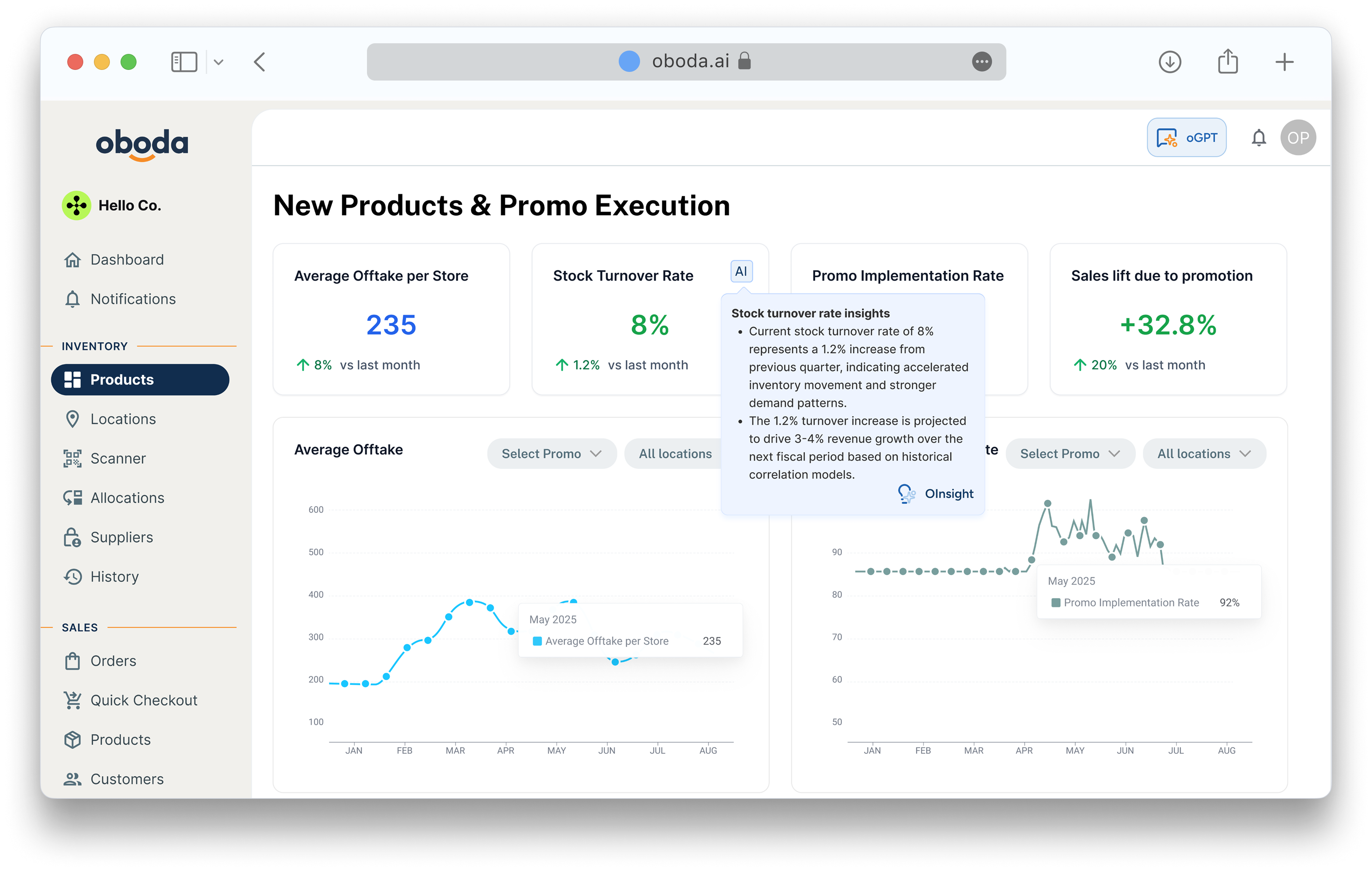
Contextual insights layered onto existing cards, data grids, and charts, turning raw data into clear, actionable takeaways at the point of use.
This is ongoing product work. The design system and interaction patterns now give teams a consistent way to introduce AI across the platform, without overriding the operational expertise of the people using it.